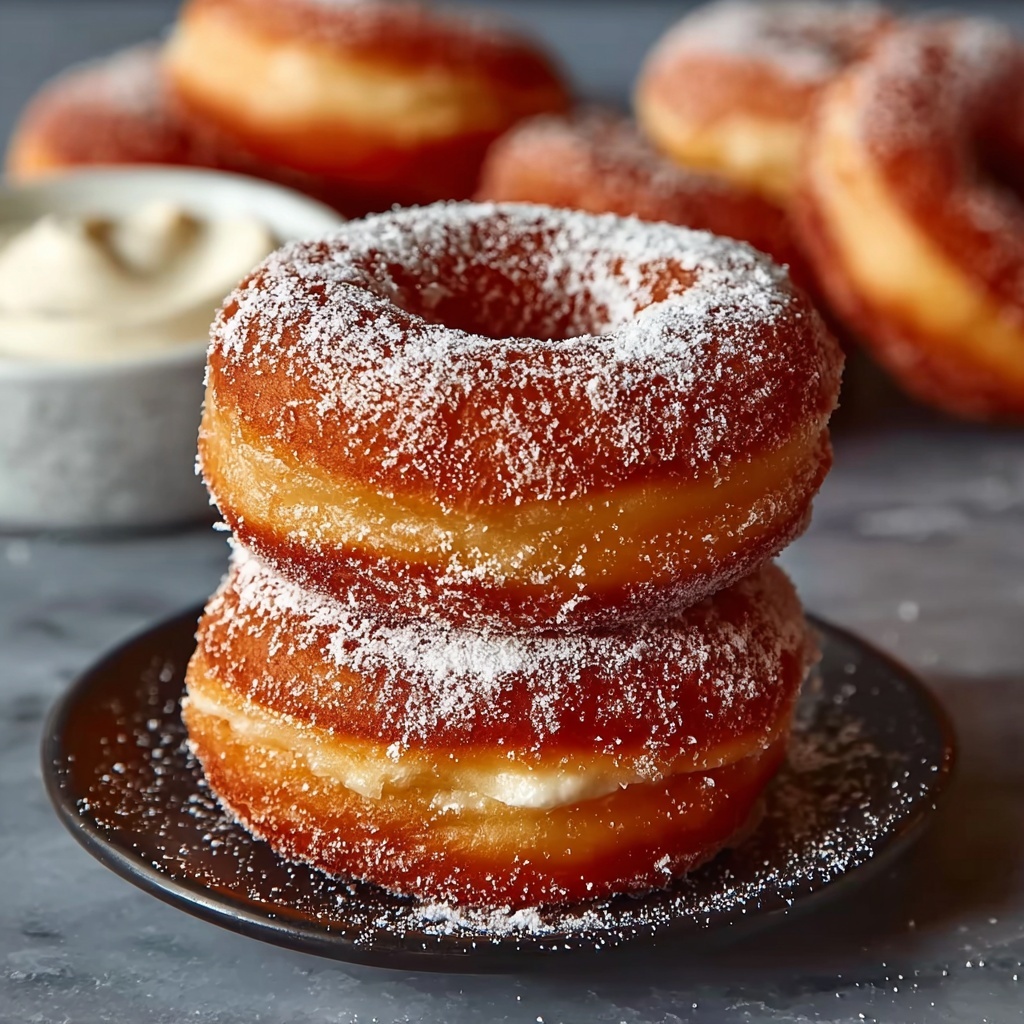
There’s nothing quite as magical as biting into a perfectly golden, flaky, and sweet treat that combines the best of two worlds—the airy, laminated layers of a croissant with the delightful crunch and ease of a donut. This Homemade Cronuts Recipe brings that bakery dream right to your kitchen counter, offering a heavenly indulgence that’s as fun to make as it is to devour. If you’ve been wondering how to create those iconic flaky pockets filled with luscious glaze and optional fresh berries and cream, get ready to embark on a rewarding three-day journey of flour, butter, and love.
Ingredients You’ll Need
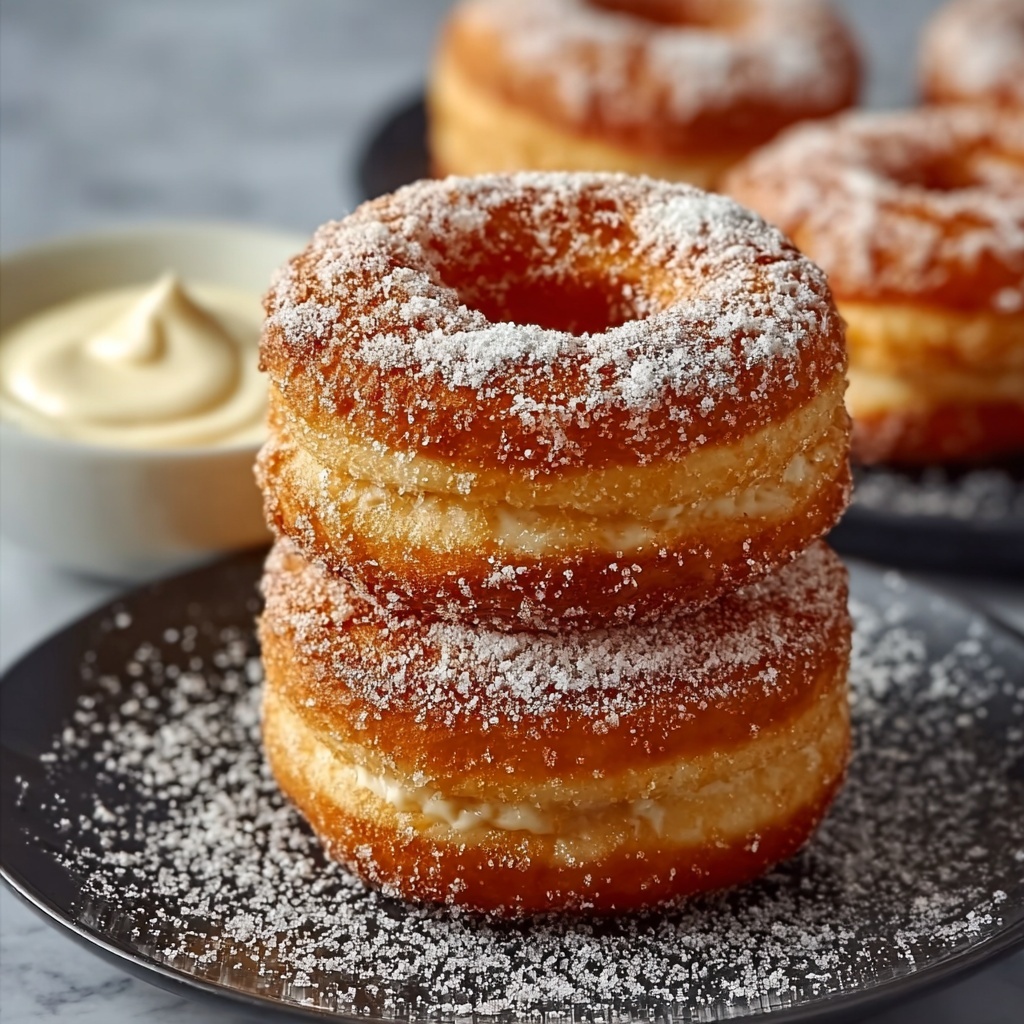
Transforming simple pantry staples into something extraordinary is what this Homemade Cronuts Recipe is all about. Each ingredient plays a pivotal role, from the tender richness of butter to the slight tang of cream, coming together to create the perfect balance of flavor, texture, and color.
- 3½ cups all-purpose flour: The backbone of your dough, providing structure and that wonderful chewiness.
- 1 tablespoon salt: Enhances flavor and balances sweetness.
- ¼ cup granulated sugar: Adds a touch of sweetness that caramelizes beautifully during frying.
- 4½ teaspoons instant dry yeast: Helps the dough rise into those irresistible layers.
- 1 cup warm water (100–110°F): Activates the yeast for a perfect rise without killing it.
- 1 large egg white: Binds ingredients and adds tenderness.
- 8 tablespoons unsalted butter, softened: Enriches the dough and aids in lamination.
- 1 tablespoon heavy cream: Provides extra moisture and subtle richness.
- 1 cup unsalted butter, softened (for butter block): The all-important fold-in that creates those signature flaky layers.
- 4 cups vegetable oil: Essential for frying to golden perfection.
- 1 cup powdered sugar: For the sweet, glossy glaze finish.
- 1 teaspoon vanilla extract: Adds depth and warmth to the glaze.
- 2 tablespoons cold water: Helps achieve the right glaze consistency.
- Optional filling – 1 cup sliced strawberries: Fresh and vibrant addition inside the cronut.
- Optional filling – 2 cups whipped cream: Adds fluffy, creamy indulgence when paired with fruit.
How to Make Homemade Cronuts Recipe
Step 1: Preparing the Dough and Butter Block
Start by mixing your essentials: flour, salt, sugar, yeast, warm water, egg white, softened butter, and heavy cream. Using a stand mixer with a dough hook makes this easier, but you can certainly do it by hand if you want a bit of an arm workout. Once the dough is smooth and elastic, set it aside to rise in a greased bowl, covered, for 2 to 3 hours until it doubles — this is where the magic begins as the yeast works its slow bubbliness to lift your dough.
In parallel, prepare the butter block by shaping 1 cup of softened butter into a neat 7-inch square on parchment paper. This chilling step is vital because the butter block acts as the flaky engine during lamination, folding into the dough multiple times to create those delicate layers. Let both dough and butter block chill overnight to firm up and develop flavor and firmness.
Step 2: Laminating the Dough
The following day, give the dough and butter block some time to come to room temperature — about 20 to 30 minutes — so they’re pliable but not too soft. Roll the dough into a 12-inch square and carefully place the butter block diagonally right in the center. Fold the dough edges over the butter to completely seal it within, like a beautiful package.
From here, roll the dough out to a 20-inch square and fold it first in half, then in half again, resulting in a compact 10-inch square. This folding process is what incorporates layers and air pockets, ultimately creating the famous light but flaky texture. Repeat this rolling and folding process once more for extra flakiness, then wrap your dough in plastic wrap and refrigerate it overnight again to firm up and let the gluten relax.
Step 3: Cutting and Frying Your Cronuts
On day three, patience continues to pay off. Allow your dough to rest at room temperature for an hour so it becomes easier to handle, then roll it out into a 15-inch square about half an inch thick. Use two round cutters—a 3.5-inch ring for the cronut shape and a smaller 1-inch ring for the hole—to cut out perfect circles with centers removed.
Place these cut doughnuts spaced out on a parchment-lined tray, cover loosely, and let them rise for two hours. Meanwhile, heat vegetable oil to 350°F (175°C)—accuracy in temperature ensures your cronuts will have a crisp exterior and a cooked-through but tender interior.
Fry the cronuts for about 90 seconds on each side in small batches (2 to 3 at a time) to keep the oil temperature steady. Drain on paper towels to remove excess oil. While they’re still warm, drizzle with a simple glaze made by mixing powdered sugar, vanilla, and water, which adds that irresistible sheen and sweet finish. If you’re feeling adventurous, fill these with fresh strawberries and whipped cream for a delightful surprise inside.
How to Serve Homemade Cronuts Recipe
Garnishes
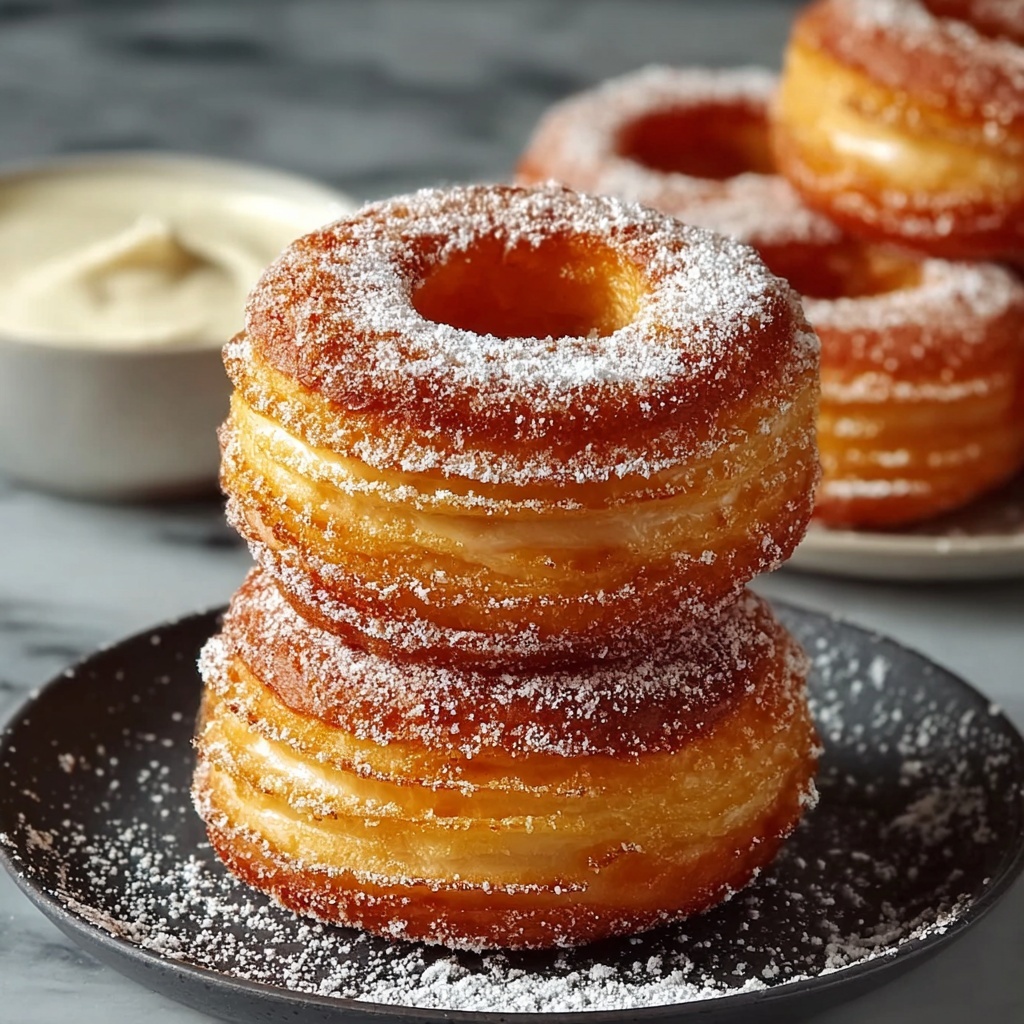
To take your homemade cronuts over the top, consider adorning them with a light dusting of powdered sugar or a gentle drizzle of melted chocolate alongside the traditional glaze. Fresh fruit like sliced strawberries or even a dollop of flavored whipped cream works wonders to brighten each bite and bring a splash of color and freshness.
Side Dishes
A warm cup of coffee or a frothy cappuccino pairs perfectly with the buttery richness of your cronuts. For brunch, consider serving them with fresh fruit salad or a glass of sparkling orange juice to balance the indulgence with light and zesty flavors.
Creative Ways to Present
Why not turn your cronuts into mini dessert sandwiches by slicing them horizontally and layering with custard, pastry cream, or ice cream? You could also stack smaller versions for a whimsical cronut tower adorned with edible flowers—perfect for impressing guests or an indulgent weekend treat.
Make Ahead and Storage
Storing Leftovers
Leftover cronuts are best enjoyed the same day, but you can store them in an airtight container at room temperature for up to two days. This helps maintain that delicate flakiness without making the dough soggy.
Freezing
If you want to make these in advance, freezing is your friend. Freeze unglazed cronuts on a tray first, then transfer them to a freezer bag for up to one month. When ready, thaw at room temperature before frying and glazing to keep that fresh-out-of-the-fryer allure.
Reheating
To bring back that fresh crispness, warm your cronuts in a preheated 350°F oven for about 5-7 minutes. Avoid microwaving as it tends to make the layers chewy instead of delightfully flaky.
FAQs
Can I use regular yeast instead of instant dry yeast?
Yes, you can, but you’ll need to activate regular yeast in warm water for about 5-10 minutes before mixing it into the dough. Instant dry yeast is simply more convenient because it can be mixed directly with dry ingredients.
Do I have to fry the cronuts or can they be baked?
Frying gives cronuts their signature crispy exterior and tender interior, but if you prefer baking, you can bake them at 375°F for about 15-20 minutes until golden. The texture will be different but still delicious!
How important is the butter block in this recipe?
The butter block is essential—it creates the flaky, layered texture that sets cronuts apart from regular doughnuts. Skipping it would result in a denser, less flaky pastry.
Can I use different types of fillings?
Absolutely! While the classic is fresh strawberries and whipped cream, you can fill cronuts with pastry cream, chocolate ganache, lemon curd, or anything your heart desires to customize your treat.
What’s the best way to know when the oil is the perfect temperature?
Using a candy thermometer is the most accurate method. Alternatively, you can drop a small piece of dough into the oil—if it browns evenly in about a minute, the oil is ready.
Final Thoughts
Making this Homemade Cronuts Recipe is a delightful adventure that rewards patience, precision, and a good dose of love with a treat that’s utterly unforgettable. Whether you’re treating yourself on a lazy weekend or impressing friends with your baking prowess, the combination of flaky layers and sweet glaze is guaranteed to bring smiles all around. So grab your rolling pin, butter, and that spark of excitement—your next favorite pastry is waiting!
Print
Homemade Cronuts Recipe
- Prep Time: 45 minutes (active), plus multiple overnight rests totaling approximately 48 hours
- Cook Time: 15 minutes (frying and glazing)
- Total Time: Approximately 50 hours and 45 minutes including resting and refrigerating times
- Yield: 12 servings
- Category: Dessert
- Method: Frying
- Cuisine: French-American
Description
Homemade Cronuts are a delightful hybrid of croissants and donuts, featuring flaky, buttery layered dough fried to golden perfection and glazed with a sweet vanilla icing. This recipe involves a multi-day process of preparing laminated dough, frying, and optional fresh strawberry and whipped cream filling, perfect for a special breakfast or dessert treat.
Ingredients
For the Pastry Dough:
- 3½ cups all-purpose flour
- 1 tablespoon salt
- ¼ cup granulated sugar
- 4½ teaspoons instant dry yeast
- 1 cup warm water (100–110°F)
- 1 large egg white
- 8 tablespoons unsalted butter, softened
- 1 tablespoon heavy cream
For the Butter Block:
- 1 cup unsalted butter, softened
For Frying:
- 4 cups vegetable oil
For the Glaze:
- 1 cup powdered sugar
- 1 teaspoon vanilla extract
- 2 tablespoons cold water
Optional Filling:
- 1 cup sliced strawberries
- 2 cups whipped cream
Instructions
- Prepare Dough and Butter Block: In a stand mixer bowl fitted with a dough hook, combine flour, salt, sugar, instant yeast, warm water, egg white, softened butter, and heavy cream. Mix until the dough is smooth and elastic. Transfer it to a greased bowl, cover, and let it rise for 2 to 3 hours until doubled in size.
- Shape Dough and Chill Overnight: Punch down the risen dough and shape it into a 10-inch square on parchment paper. Place it on a tray, cover with plastic wrap, and refrigerate overnight to rest and slow ferment.
- Prepare Butter Block: On a sheet of parchment, draw a 7-inch square. Roll the softened butter between two sheets of parchment into that square shape. Chill the butter block in the refrigerator overnight to firm up.
- Laminate the Dough: Allow the dough and butter block to rest at room temperature for 20 to 30 minutes. Roll the dough out to a 12-inch square, then place the butter diagonally in the center. Fold the dough edges over the butter to seal it inside. Roll the dough out to a 20-inch square, fold in half and then fold in half again to form a 10-inch square. Repeat the rolling and folding process once more. Wrap the dough in plastic and refrigerate overnight.
- Cut and Proof Cronuts: Let the laminated dough stand at room temperature for 1 hour. Roll it out into a 15-inch square about ½ inch thick. Using a 3.5-inch ring cutter and a 1-inch ring cutter, cut out cronut shapes. Arrange them on a parchment-lined tray with space in between. Cover loosely and let rise for 2 hours until puffed.
- Heat Oil and Prepare Glaze: Heat vegetable oil in a deep fryer or heavy pot to 350°F (175°C). In a bowl, whisk together powdered sugar, vanilla extract, and cold water to create a smooth glaze.
- Fry the Cronuts: Fry the cronuts in batches of 2 to 3 pieces, cooking each side for 90 seconds until golden brown and flaky. Drain them on paper towels to remove excess oil.
- Glaze and Fill: While still warm, drizzle the cronuts with the prepared vanilla glaze. Allow them to cool completely. Optionally, fill with sliced strawberries and whipped cream for a fresh, creamy finish.
Notes
- The dough requires multiple days for proper fermentation and lamination to achieve the cronut’s signature flaky layers.
- Maintain the oil temperature at 350°F to ensure the cronuts cook evenly without absorbing excess oil.
- The glaze can be adjusted in consistency by varying the amount of cold water for a thicker or thinner coating.
- For best texture, serve cronuts the same day they are fried and glazed.
- Use fresh, chilled butter for the butter block to enable clean folding and layering.
- Ensure dough and butter are at similar temperatures before laminating for optimal results.